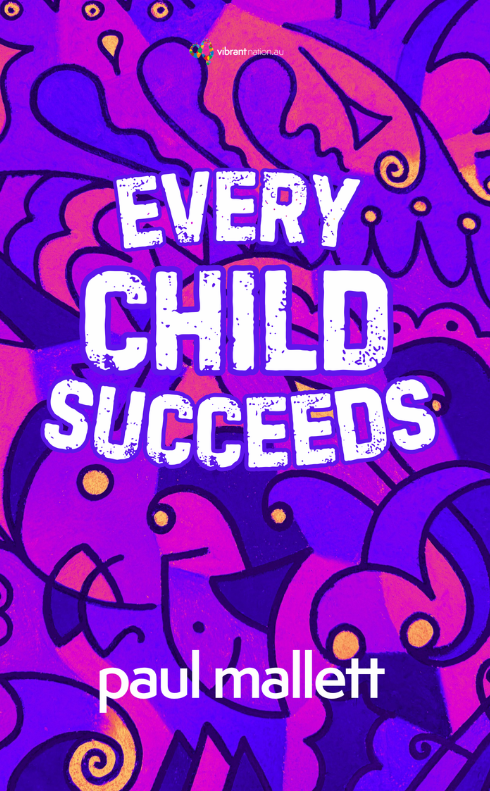
Every Child Succeeds argues that Tasmania can become the first jurisdiction in Australia to build and legislate a genuine Cradle-to-Career System, one that secures stewardship, continuity and shared obligation from pre-conception through young adulthood.
Every Child Succeeds begins with a simple truth. The hardship too many children face is not inevitable. It is the predictable outcome of how societies organise opportunity, stability, belonging, income, and care.
Child poverty does not appear without warning. When early learning depends on postcode, when housing is unstable, when support falls away at school transitions, and when adolescence becomes a sorting point rather than a protected phase, inequality quietly hardens. What we later describe as failure was shaped much earlier. This book refuses to accept that pattern as normal.
Drawing on lived experience across Tasmania, the book moves between everyday stories and structural explanation. Children navigating classrooms shaped by workforce shortages and postcode differences. Families carrying the strain of fragmented services. Young people drifting from participation not because they lack effort, but because belonging thins as life becomes harder to manage. These are not isolated misfortunes. They are recurring patterns produced by systems that reset responsibility at key moments and rely on private capacity to absorb risk.
Every Child Succeeds reframes these patterns through a prevention-first lens. Drawing on insights such as the Power Threat Meaning Framework, it shows how withdrawal, delay, and disengagement often represent understandable responses to sustained pressure rather than individual deficit. When harm forms predictably, blaming children or families is not only unkind. It is analytically wrong.
The book sets out a practical reform agenda for Tasmania through a prevention-first Cradle-to-Career System that holds responsibility across the life course. At its centre is a Children and Young Persons Accord binding shared public responsibility from pregnancy through early adulthood. Thrive by Five protects the early childhood transition to school. Transition at Twelve safeguards the move into adolescence. Place-based collaboration through Wraparound Tasmania resolves unmet need collectively. Tasmania Together and Decisions with Young People embed belonging and shared civic participation. And MyFutureFund ensures every child begins adulthood with real economic capital, not just hope.
Written to be used, the book speaks to policymakers, educators, practitioners, community leaders, and all those who carry the downstream costs of preventable harm. It does not ask systems to try harder. It shows how they can be reorganised so support arrives early, continuity is protected, and growing up does not require children or families to carry structural risk alone.
Every child has the right to a fair start and a supported path forward.
The patterns are known.
The question now is whether we are prepared to build the systems that prevent harm before it begins.
“I have spent much of my working life catching children and families at the bottom of the cliff. This book is about building the fence at the top, reshaping the ground beneath it, and ensuring that every child who stands there has the stability, capital, and confidence to pursue the horizon they choose, and to participate fully in the social, economic, and civic life of our community.”
paul mallett