
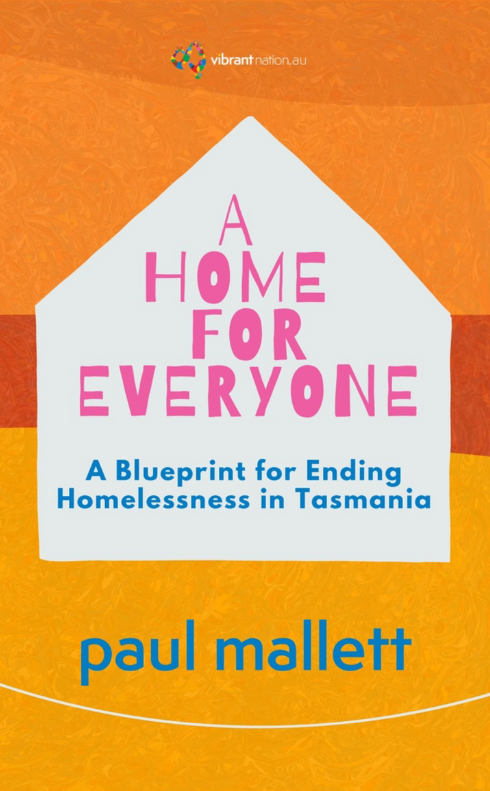
Ending homelessness is complex. But complexity does not equal inevitability. Homelessness is the predictable outcome of how housing systems are designed, governed and allowed to operate over time. And those systems can be redesigned.
Drawing on lived experience and patterns observed across Tasmania, A Home for Everyone traces homelessness from everyday circumstances to structural causes. Young people leaving care with nowhere secure to land. Families holding tenancies together until one shock pushes them over the edge. Older Tasmanians waiting years for housing that never arrives. People moving endlessly between temporary places while doing everything asked of them. These stories reflect recurring system patterns rather than isolated misfortune.
The book reveals how homelessness is produced when housing supply fails to accumulate, crisis responses replace prevention, and responsibility fragments across institutions. Temporary accommodation becomes a destination rather than a bridge. Prevention arrives too late. Accountability dissolves across system boundaries. These outcomes are not accidental. They are predictable, and they are preventable.
A Home for Everyone sets out a practical architecture for ending homelessness. Twenty-one concrete recommendations are organised into five action pillars that together form a coherent reform agenda. The reforms establish housing as a guaranteed outcome rather than discretionary assistance, make permanent housing the default response, treat housing supply as enduring public infrastructure, embed prevention as a core public duty, and align delivery locally so that lived experience holds real authority.
Written to be used, the book speaks to legislators, councils, housing providers, community organisations and all those who carry the downstream costs of homelessness. It does not treat homelessness as inevitable. Instead, it shows how it is produced and how it can be ended through prevention-first system design, steady accumulation of housing supply, safe institutional exits and long-term stewardship of land and housing.
Homelessness can be ended.
The tools are known.
What remains is the collective decision to build a system that never again accepts homelessness as inevitable.
“A secure home is as essential to life as clean water, reliable electricity and safe roads. Without it, people are pushed into harm and systems pay for failure again and again. Making housing a human right is a practical, moral and economic decision to build a more just Tasmania. Ending homelessness is not a destination. It is a practice. It requires leaders willing to hold responsibility rather than deflect it, and communities willing to act as stewards rather than spectators. A home for everyone is not an abstract ideal. It is the foundation of health, learning, work, belonging and dignity. It is the ground on which a fair and flourishing society stands.”
paul mallett