
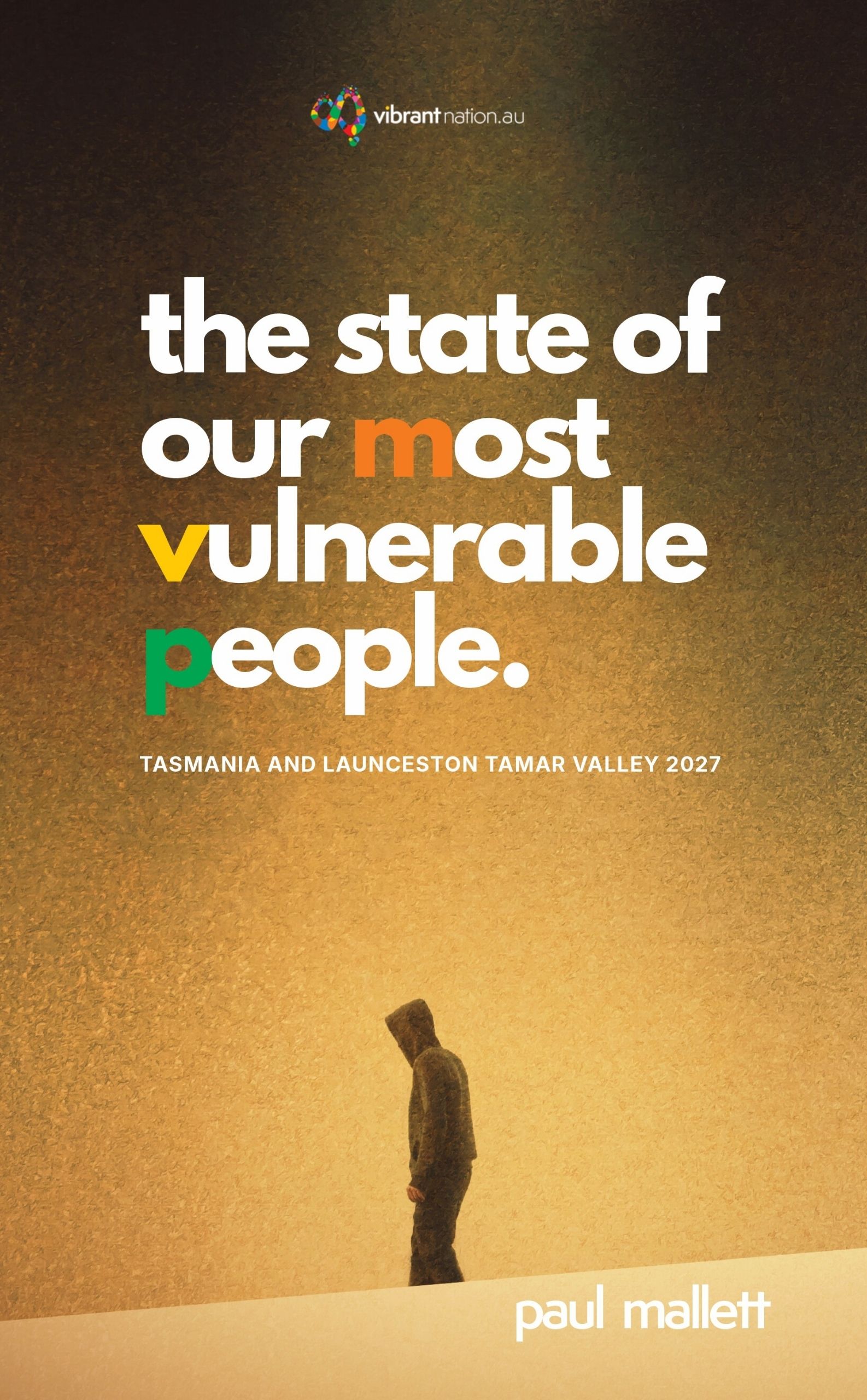
The State of Our Most Vulnerable People 2027 is the evidence base for a prevention-first vision of Tasmania and the Launceston Tamar Valley.
The State of Our Most Vulnerable People 2027 is an evidence-informed civic report about hardship, prevention, and shared responsibility across Tasmania, with particular attention to the Launceston Tamar Valley.
Drawing on public data, local evidence, community reporting, policy research, and more than three decades of work across human services, paul mallett examines the conditions shaping vulnerability across twenty population groups. The report brings together evidence about children and young people, older people, Aboriginal and Torres Strait Islander Peoples, care-experienced young people, people with disability, people experiencing mental ill-health, homelessness, housing stress, energy hardship, family and sexual violence, socioeconomic disadvantage, digital exclusion, alcohol and other drug harm, justice system contact, rural and regional isolation, caring responsibilities, multicultural settlement, LGBTIQA+ exclusion, chronic health conditions, and the experiences of veterans and ex-serving ADF members.
At its centre is a prevention-first argument: that too much harm is being met too late, after people have already reached crisis. The report asks what the data shows, what the data misses, where pressures are compounding, and what kind of public responsibility follows when hardship is visible, predictable, and preventable.
This is a book about seeing people clearly. It is a call for earlier action, stronger local evidence, better systems, and a Tasmania willing to build the conditions that help people stay safe, well, connected, housed, supported, and able to belong.
“We saw how much was broken. We refused to walk on by.
We stood together proudly and said: those numbers will not fly.”
paul mallett, 2026