
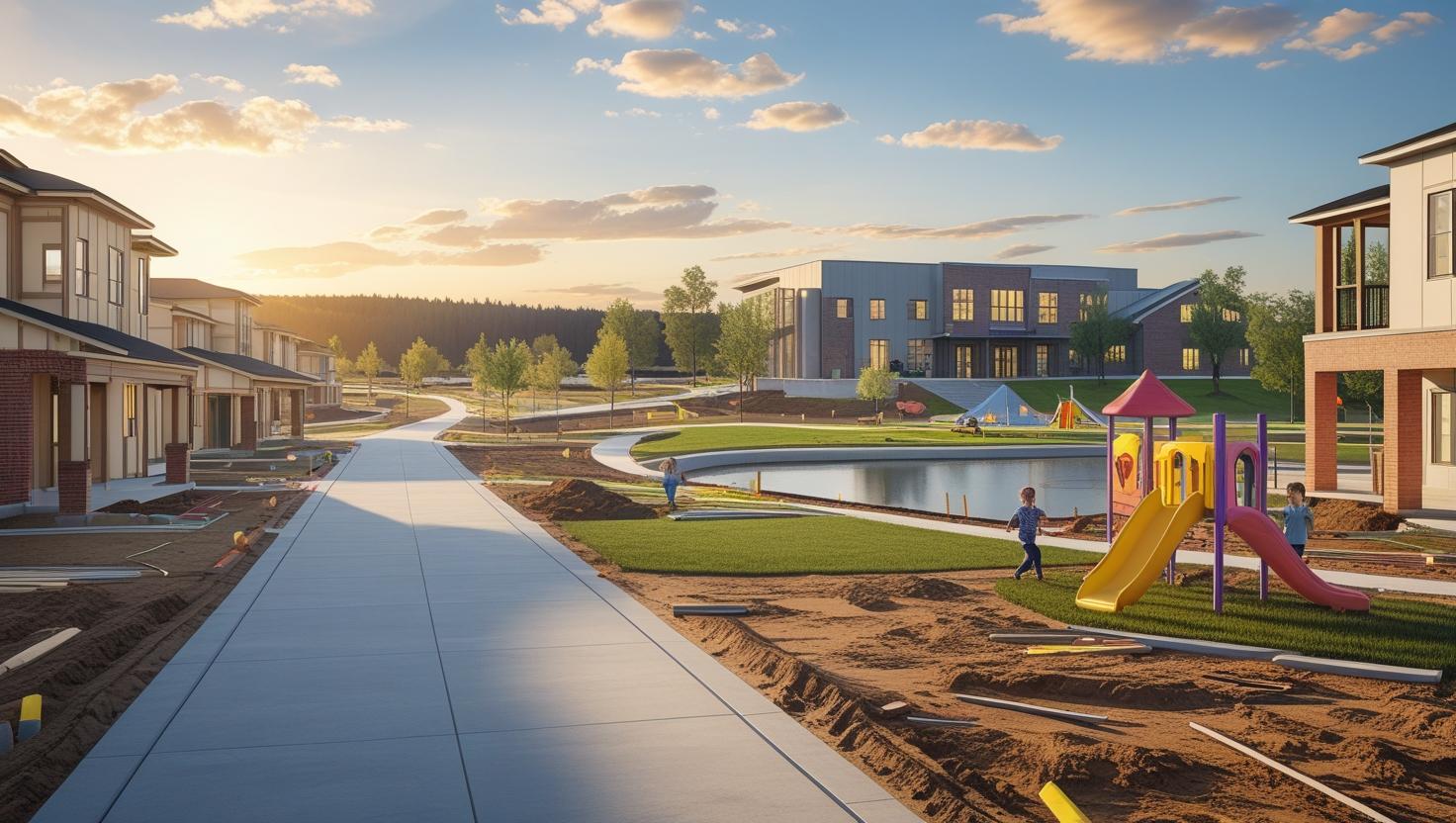
What would it take to build healthy, efficient, mixed, and dignified neighbourhoods?
paul mallett advocates for a population growth strategy that is honest about change and thoughtful about how Launceston will grow over the two generations and beyond. Growth is coming whether we prepare for it or not. The question is whether we shape it, or let it shape us.
Imagine a plan that gives clear guidance on where new homes should go and where they should not. A plan that protects floodplains, farmland, and bushland while guiding most new housing toward walkable neighbourhoods, serviced land, and public transport corridors. Picture a simple framework that aligns population growth with the infrastructure that supports it: footpaths, drainage, transport, schools, parks, medical services, and neighbourhood centres.
A clear approach helps families, builders, investors, and community groups understand the rules. It creates certainty for responsible growth and sets fair boundaries around what should not proceed. It reduces conflict. It protects local character. It helps the city say yes to the right things and no to the things that would cost us more in the long run.
Population growth is not just numbers. It is the shape of everyday life. Streets that feel safe. Local shops that thrive. Parks that breathe. Transport that works. A city where young people can afford to stay and older Tasmanians can age well in their neighbourhoods.
The aim is simple: a city that grows with intention, not accident. A plan that respects heritage, protects nature, and prepares for a future that will come whether we are ready or not.
Let’s guide our growth with clarity, confidence, and care, including
-
Passivhaus Covenant for All New Dwellings
Adopt a citywide residential standard requiring all new homes to meet certified Passivhaus performance.
• Ensure airtight, insulated, well-ventilated homes that deliver low energy bills for life and healthier indoor environments.
• Embed equity by design so all households — renters and owners — benefit from superior building performance.
• Support industry through training, certification, and local supply-chain development.
-
Neighbourhood Batteries (Approximately One per 50 Homes)
Integrate distributed community batteries into every new neighbourhood plan.
• Charge during daylight hours and share stored energy across homes at night.
• Improve local grid reliability, flatten peak demand, and reduce energy costs.
• Ensure renters and lower-income households share in clean-energy benefits through community, rather than individual, infrastructure.
-
Rainwater Tanks on Every Roof
Require all new dwellings to include rooftop rainwater capture with a tank plumbed to non-potable uses.
• Make sustainability visible, everyday, and practical at the household level.
• Increase resilience during dry spells and reduce strain on the municipal water network.
• Support local installers, manufacturers, and apprenticeships.
-
Parks Within 400 Metres + Smart PlayPods
Guarantee that every home is within roughly 400 metres of a safe, well-lit, well-maintained public park.
• Install smart PlayPods that release sports and play equipment and track usage data to guide council investment.
• Make daily movement easy and encourage families, children, and older residents to be active.
• Use activity data to fund prevention programs and maintain high-performing sites.
-
Shared Green and Edible Verges
Introduce shaded, edible, and shared green verges across residential streets.
• Plant herbs, berries, fruit trees, edible natives, and shade trees along footpaths.
• Grow neighbourhood identity, food literacy, and belonging while cooling street-level microclimates.
• Encourage residents to co-steward verges through small grants and community-gardening partnerships.
-
Quiet Equity: One in Five Trust/Social Homes, Indistinguishable
Embed mixed tenure into every new development.
• Require that one in five dwellings be high-quality trust or social housing, built indistinguishably from private homes.
• Deliver medium-density housing that preserves dignity, prevents stigma, and supports inclusive, age-friendly communities.
• Use planning tools to ensure mixed streets, not segregated enclaves.
-
Universal Design from the Start
Standardise universal-access features across all public and shared spaces.
• Include integrated ramps, tactile ground surfaces, braille overlays, multilingual signage, accessible toilets, and pram-friendly routes.
• Shift from compliance to invitation — designing spaces that welcome all residents, regardless of age, mobility, or language.
• Audit accessibility annually to ensure lived experience drives continuous improvement.
-
Retrofit at Scale for Older Housing Stock
Launch a whole-of-city retrofit program for homes built before the solar and high-efficiency era.
• Prioritise insulation, airtightness, ventilation, heat-pump systems, and rooftop solar where feasible.
• Build a local, skilled retrofit workforce supported by TAFE training, accreditation, and industry partnerships.
• Improve health outcomes by eliminating cold, damp housing and reduce long-term system costs through upstream prevention.