paul mallett calls for Launceston to establish a City Deal for Kids
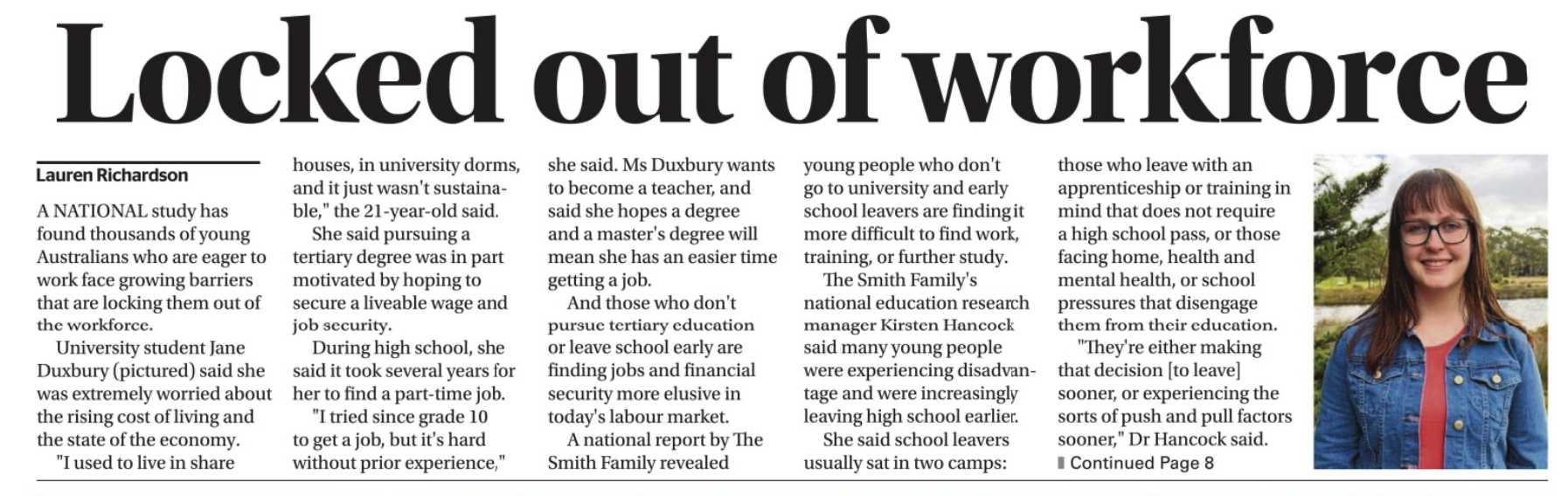
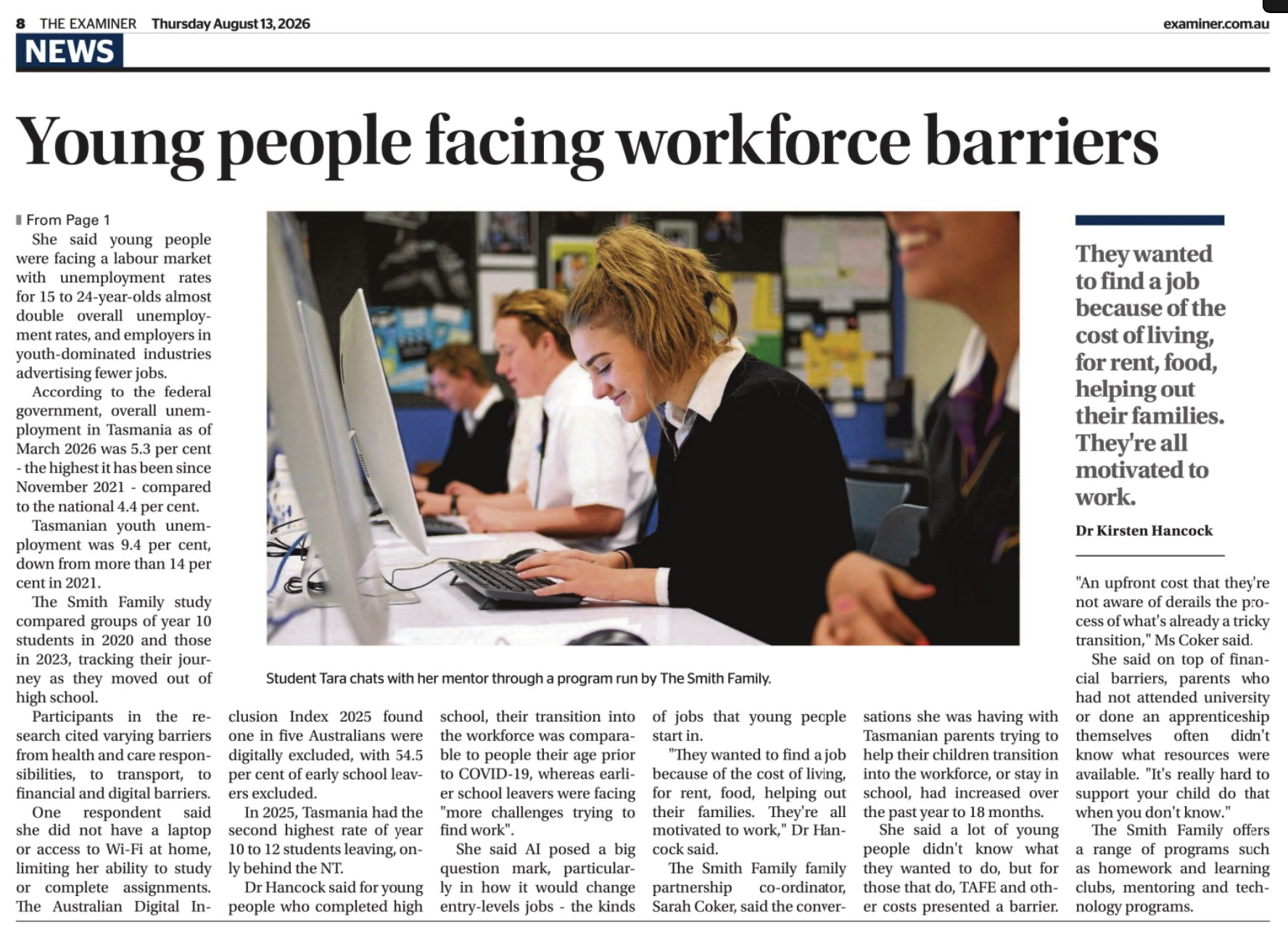
In reply to “Locked out of workforce” by Lauren Richardson (The Examiner, 13 August 2026).
To the people of Launceston
Lauren Richardson’s article describes young people who want to work but are finding the door increasingly difficult to open. That is what we see at the end of a much longer journey.
Intergenerational disadvantage builds across childhood and adolescence. It hardens when help arrives late, families are left to bridge gaps alone and responsibility disappears at important transitions.
That is why, as a prospective candidate for Mayor and Councillor, I am calling for Launceston to establish a City Deal for Kids.
Council cannot solve every problem facing children and families, but it can lead. A mayor can convene the right people, build the local case and advocate to the Tasmanian and Australian governments.
Launceston has done this before. The City Heart redevelopment and the University of Tasmania campus relocation show what three levels of government can deliver when they share responsibility, investment and ambition.
I believe we should bring that same commitment to the children and young people of the Launceston Tamar Valley.
What we can see
In my new book, The State of Our Most Vulnerable People, I map the data showing that many measures of childhood disadvantage across the Launceston Tamar Valley have remained unchanged or worsened. It has been more than a decade since I published The State of Launceston’s Children in 2014, yet many of the same patterns remain.
We see children starting school developmentally vulnerable. We see teachers carrying the effects of hunger, housing stress, disability barriers, family pressure and unmet health needs into their classrooms. We see young people lose connection around the move to high school and receive help only after disengagement has taken hold.
We see teenagers and young adults held back by practical barriers: transport, course costs, equipment, digital access, work experience, tools or a licence. These are not failures of character, capability or ambition. They are predictable gaps that have been left open for too long.
We must do better and do things differently for our children and young people. A City Deal for Kids is that vision.
What needs to change
In my book Every Child Succeeds, I set out a prevention-first cradle-to-career system covering the first twenty-five years of life. The idea is simple: children live one continuous life, so the systems around them must learn to hold the whole journey.
Support is currently divided across health, housing, early childhood, schools, family services, training and employment. At each transition, responsibility can reset. Families explain again, prove their need again and wait again. Too often, they become the navigator and case manager for systems that do not work together.
A cradle-to-career system would organise services and investment around a child’s development. It would respond when pressure first appears, rather than waiting for crisis, and protect the transitions where children are most likely to lose ground.
That means supporting families before and after birth, treating quality early learning as essential infrastructure and protecting the move to high school through Transition at Twelve.
It means Adolescence Pathway Support that provides a trusted adult, brokers work experience and training, and removes barriers such as transport, equipment, digital access and course costs.
It also means MyFutureFund, giving young Tasmanians practical capital for study, training, tools, a licence or relocation. A choice on paper means little if a young person cannot afford to act on it.
These are not separate programs. They are connected parts of one system designed to help every child move forward without being left behind when responsibility changes hands.
Why a City Deal for Kids?
A City Deal for Kids would turn this cradle-to-career blueprint into a place-based commitment for the Launceston Tamar Valley. It would bring the City of Launceston, Meander Valley Council, West Tamar Council and George Town Council together with the Tasmanian and Australian governments and the organisations already supporting local children and families.
Substantial investment, services, effort and goodwill already exist. What is missing is a way to organise them around one shared journey and one clear outcome: every child succeeding.
The Children and Young Persons Accord proposed in Every Child Succeeds would provide that shared commitment. It would require the parties to act on early warning signs, share responsibility for children’s progress and report publicly on whether children and young people are better off.
This is not another layer of administration. It is about making sure someone holds the thread: noticing when a child loses ground, acting early and maintaining support across schools, services and life stages.
At present, responsibility is too often unclear. A City Deal for Kids would make it clear.
Who pays? We pay either way
I have spent much of my working life helping children and families after they have reached the bottom of the cliff. I have seen the skill, compassion and effort required once hardship has become crisis. I have also seen how much harm could have been interrupted earlier.
We know many of the pressure points. Developmental vulnerability is visible before school. The move to high school carries risk. Disengagement begins long before a young person leaves. Housing, health, transport, money and reliable relationships shape whether they can participate and progress.
We are already paying through long-term unemployment, child safety intervention, justice system involvement, greater use of health and mental health services, and years of productive and fulfilling life lost as opportunity narrows. Most tragically, too many young lives are lost to suicide.
If harm is predictable, prevention is possible. We can invest earlier in the conditions that help children move forward, or pay later after harm has hardened and disadvantage has passed to another generation.
A City Deal for Kids will not make every childhood easy or prevent every setback. It would help close the predictable gaps that should never be allowed to determine a child or young person’s future.
Launceston is small enough to see the consequences of fragmented support. I believe it is also capable enough to hold responsibility differently. That is why I am calling for a City Deal for Kids: to gear the cradle-to-career system around children and families and interrupt intergenerational disadvantage before another generation reaches the same locked door.
paul mallett
Prospective Candidate for Mayor and Councillor, City of Launceston
vibrantnation.au
Letter to the Editor
In reply to “Locked out of workforce” by Lauren Richardson (The Examiner, 13 August 2026).
Dear Editor
The most important finding in Lauren Richardson’s article was not an unemployment statistic. It was that young people remain motivated to work, even as The Smith Family’s research shows their pathways into employment, training and further study are narrowing.
This is not a motivation problem. It is a problem with how our systems work. By the time a young person leaves school, the narrowing has often been happening for years. Work experience can depend on who their parents know. Training depends on whether they can afford the course, equipment or laptop. Employment may depend on transport, a licence or a car. Guidance arrives late, responsibility changes hands and no single part of our child and family support system is responsible for holding the whole journey.
By sixteen, many young people are no longer choosing between real options. They are selecting from whatever is still standing. My books The State of Our Most Vulnerable People and Every Child Succeeds show how these predictable patterns develop across childhood and adolescence and repeat across generations. They also offer a hopeful blueprint for change: a bold, prevention-first cradle-to-career system designed to interrupt intergenerational disadvantage and help build a vibrant city where children and young people thrive.
That is why I am calling for a City Deal for Kids across the Launceston Tamar Valley. It would bring the Australian and Tasmanian governments and our neighbouring councils together around one cradle-to-career commitment. Every young person would have a named pathway lead from early secondary school into adulthood. Mentoring, employer-connected learning and guided work experience would become standard supports. Transport, digital access, equipment and course costs should not decide who gets to participate. MyFutureFund would help meet the practical costs of entering work, training or further study.
Launceston already knows what governments can achieve through a City Deal. I believe we should bring that same commitment to our children and young people. They have not run out of ambition. Too many have run out of ladders.
paul mallett
Prospective Candidate for Mayor and Councillor, City of Launceston
vibrantnation.au