paul mallett calls for Launceston to renew its Child Friendly City ambition
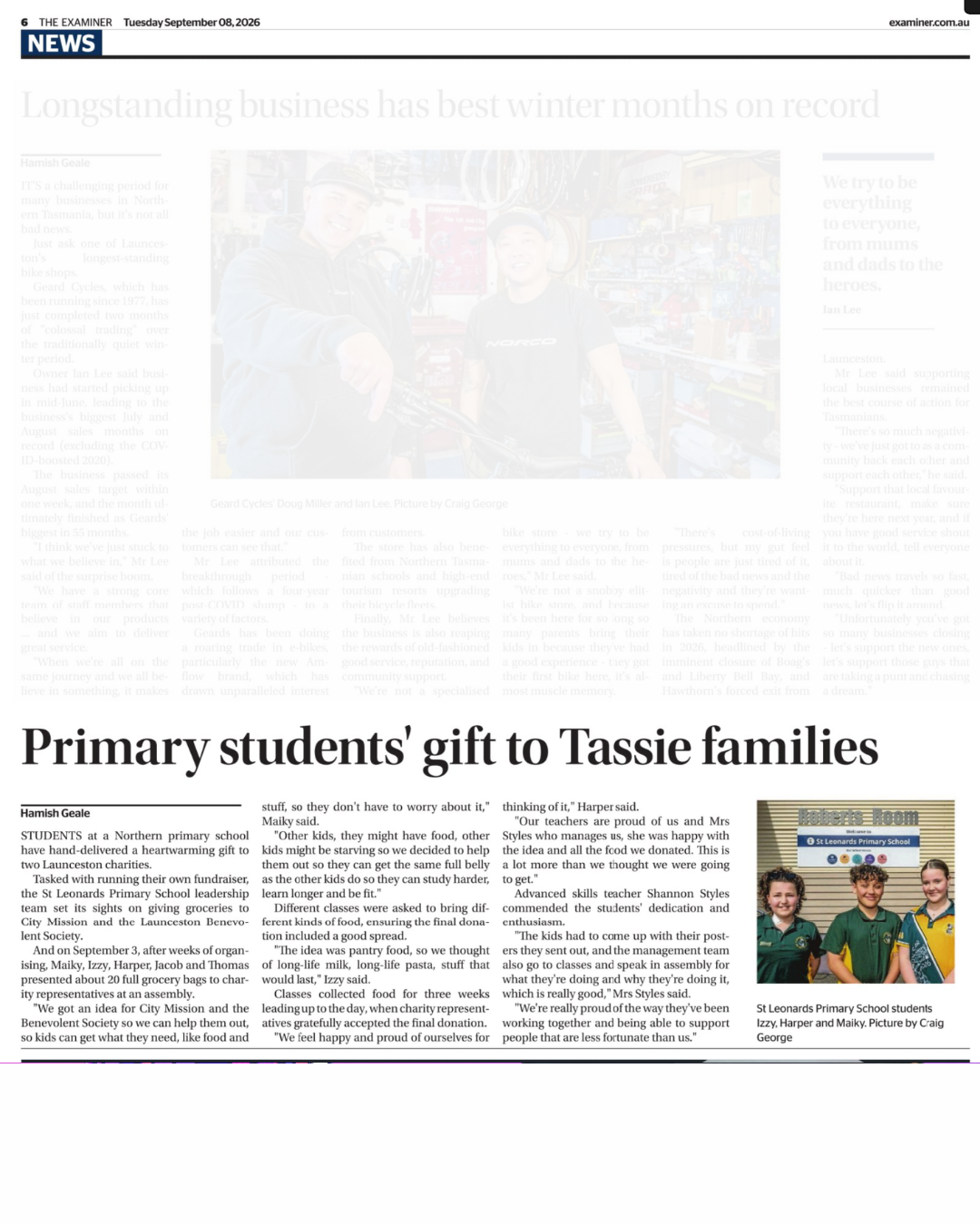
In reply to “Primary students’ gift to Tassie families” by Hamish Geale (The Examiner, 8 September 2026).
To the people of Launceston
Five students from St Leonards Primary School quietly showed us something important (The Examiner, p. 6, 8 September). Maiky, Izzy, Harper, Jacob and Thomas saw children in our community doing it tough, organised a school food drive and delivered around twenty bags of groceries to two local charities. That is citizenship.
Young people already care about this city. They already notice problems, generate ideas and act. I think we should create more places in our civic life where we genuinely listen to them and take those ideas seriously.
This is not a new interest for me. In 2013, while leading Launceston’s Communities for Children initiative, my team was involved in the work around Launceston becoming a Child Friendly City, alongside the development of The State of Launceston’s Children 2014. More than a decade later, I would like to work with others to pick up that thread and pursue Launceston becoming recognised as a UNICEF Child Friendly City. But I am less interested in the badge than the practice.
A child-friendly city listens to children and gives their views real weight. When Council asks young people what they think, we should report back: this is what we heard, this is what we acted on and why, and this is what we could not progress and why. Council must write receipts.
A child-friendly city gives children and young people a regular place at the front of the Council chamber. Imagine every Council meeting beginning with a five-minute contribution from a primary, secondary or senior secondary student, or group of students. Their issue. Their words. Their opportunity to tell elected representatives and the community something they think matters.
A small ritual, perhaps, but an important one. A little like ringing the opening bell at the New York Stock Exchange. It would say something about what the institution values, while creating an opportunity to encourage civic engagement and knowledge of how local government works.
A child-friendly city honours the contribution children and young people make now. Young people may not have a vote yet, but they have a voice and already make meaningful contributions to our community, just as the students at St Leonards demonstrated.
I would like us to explore an annual Junior Citizen Award, recognising children who are contributing to their schools, families and communities, and a Student Design Award that gives young people real Launceston problems to solve and a real public audience for their ideas. Young people should not be a token slot or an afterthought. They should be full participants whose ideas are taken seriously and whose contributions are publicly recognised.
A child-friendly city thinks and acts for future generations. I would place one more thing in the Council chamber: a Hundred-Year Seat, a specially marked chair representing the people who are not yet here.
When a ten-year-old finishes speaking to Council, they could take their place in the chamber in that chair. At other times, the empty Hundred-Year Seat would remind us that our responsibility reaches beyond even that child’s lifetime. Every planning decision, every tree we plant, every piece of infrastructure we build and every problem we leave unresolved will eventually become somebody else’s inheritance.
The young people speaking to us today are the nearest connection we have to the great-grandchildren that chair represents. But listening to children is only part of what a child-friendly city must do.
More than a decade ago, The State of Launceston’s Children Report asked us to look honestly at how our children were faring. In my new report, The State of Our Most Vulnerable People 2027, I return to many of those same questions. The uncomfortable truth is that too many children are still doing it too tough.
In 2024, more than one in four children starting school in Launceston City were developmentally vulnerable on one or more domains. And across our city, the underlying geography of disadvantage has barely shifted in a decade.
That does not mean nothing has been done. There are extraordinary teachers, families, community workers, services and organisations supporting children every day. It means we have not yet shifted some of the outcomes that matter most.
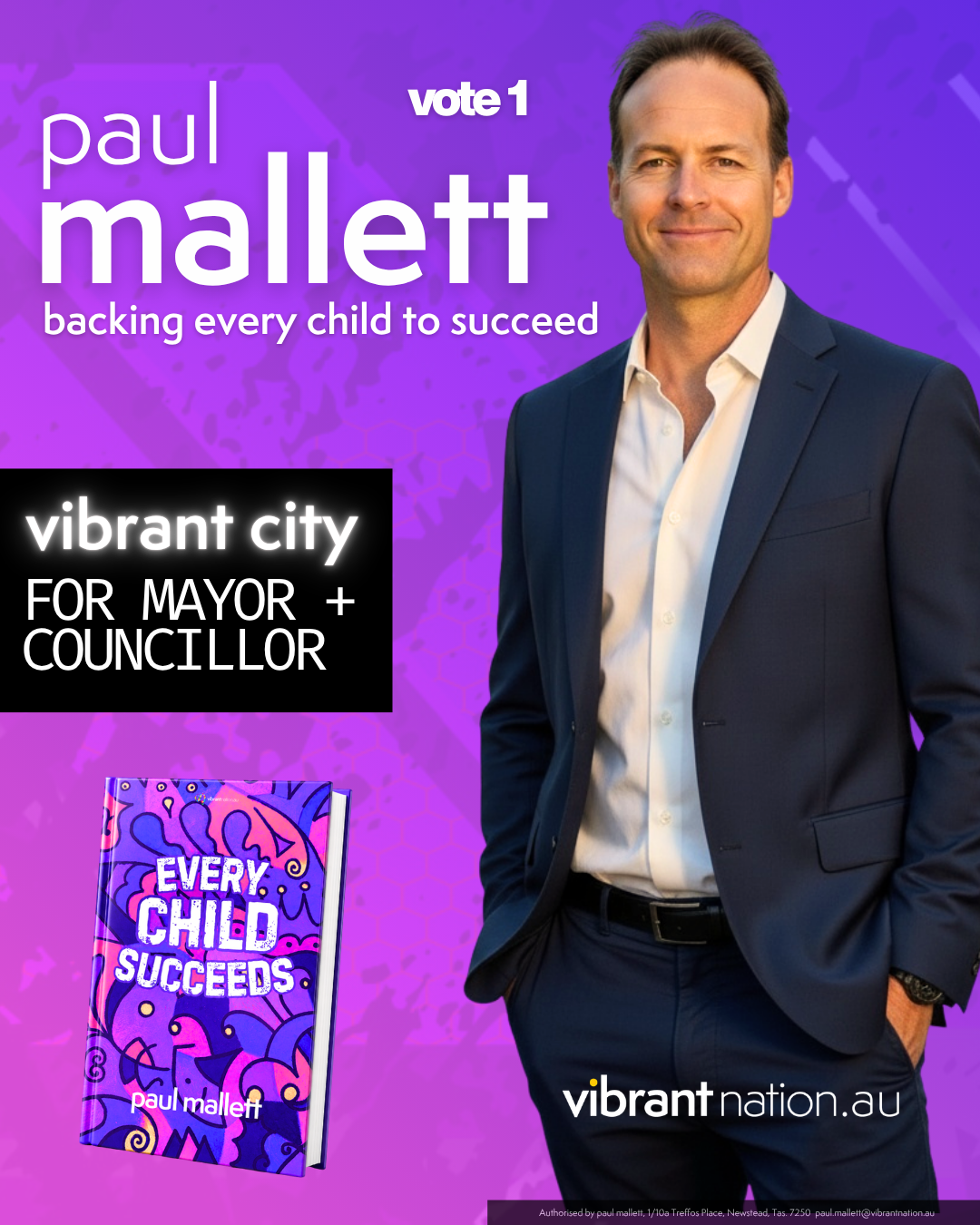
That is why my vision for a City for Kids goes beyond giving young people a microphone (see previous post). In Every Child Succeeds, I argue for a cradle-to-career approach that holds responsibility for children from pregnancy and the earliest years, through school, adolescence and into young adulthood. Children do not grow up in policy silos, and responsibility should not disappear every time they change schools, programs, services or stages of life.
I want Launceston and the Tamar Valley to become the place where we demonstrate what that looks like. A City Deal for Kids would bring local, State and Commonwealth governments together with schools, Aboriginal community-controlled organisations, health and community services, universities, business, philanthropy, families and young people around one shared cradle-to-career commitment.
The City Deal is the mechanism. Every Child Succeeds is the blueprint. The goal is simple: hold responsibility together long enough, and act early enough, so every child advances toward adulthood with the skills, support and foundations for a good life.
That is the connection I make when I read about five children from St Leonards filling twenty grocery bags. We should celebrate what they did. We should listen to what children tell us. We should give their ideas real weight. But we should also ask why children in our city still see other children going hungry in the first place.
Five kids from St Leonards noticed a problem and decided not to wait. Our responsibility is to listen to them now, and to build the systems that mean the next generation of children has fewer of those problems left to solve.
That is what a genuinely child-friendly city would mean to me.
paul mallett
Prospective Candidate for Mayor and Councillor, City of Launceston
vibrantnation.au
Letter to the Editor
In reply to “Primary students’ gift to Tassie families” by Hamish Geale (The Examiner, 8 September 2026).
Dear Editor
Five students from St Leonards Primary School quietly showed us something important. Maiky, Izzy, Harper, Jacob and Thomas saw children in our community doing it tough, organised a school food drive and delivered around twenty bags of groceries to two local charities. That is more than a nice story. It is citizenship.
Young people already care about this city. They notice problems, generate ideas and act. We should create more places in civic life where we genuinely listen to them and take those ideas seriously.
In 2013, while leading Communities for Children, my team was involved in the work around Launceston becoming a Child Friendly City, alongside the development of The State of Launceston’s Children 2014. More than a decade later, I believe we should pick up that thread and work toward Launceston becoming a UNICEF Child Friendly City. But the badge matters less than the practice.
A truly child-friendly city should listen to children and give their views real weight. When Council asks young people what they think, it should report back: this is what we heard, this is what we acted on and why, and this is what we could not progress and why. Council should write receipts.
I would also like to see children and young people given a regular place at the front of the Council chamber, with students from primary, secondary and senior secondary schools invited to open meetings with a short contribution on something they believe Council should hear. Junior Citizen Awards and Student Design Awards could further recognise young people already contributing to their communities and give them real local problems to tackle.
But listening is only part of the job. My report The State of Our Most Vulnerable People shows that too many children are still doing it too tough, and that we have not shifted some of the most important measures of childhood adversity nearly enough. In 2024, more than one in four children starting school in Launceston City were developmentally vulnerable on one or more domains. Schools and community services do exceptional work, yet there is much more for us to do together.
That is why my broader City for Kids platform also draws on Every Child Succeeds and a cradle-to-career model that holds responsibility for children from the earliest years through school, adolescence and into adulthood. A child-friendly city should not only hear children today. It should act early enough, and work together long enough, to improve the conditions in which they grow up.
Five kids from St Leonards saw a problem and decided not to wait. We should build a city that does not make children wait to be heard, or wait until disadvantage has hardened before we act.
paul mallett
Prospective Candidate for Mayor and Councillor, City of Launceston
vibrantnation.au